We'll not be updating this site for the immediate future but please go to our new Facebook page at https://www.facebook.com/leicesteracg to see what we're up to.
Tuesday, 10 March 2020
Leicester ACG new Facebook page
We'll not be updating this site for the immediate future but please go to our new Facebook page at https://www.facebook.com/leicesteracg to see what we're up to.
Sunday, 28 July 2019
We repeat, no war but the class war!
This weekend, Leicester ACG members were asked to speak at a No War But The Class War meeting, hosted by Birmingham Revolutionary Anarchist Group (RAG). Despite it being a Saturday evening, it was a packed meeting, with a good number of RAG members, ACG people, comrades from the Communist Workers' Organisation (CWO), Midlands Discussion Forum and others completely new to anarchist communist politics.No War But The Class War is an informal coalition of different groups who take a revolutionary internationalist position and view war as part and parcel of the capitalist system. The only way to stop wars is to fight the system that causes wars. Rather than call on governments to stop engaging in slaughter, we see the need for militant sections of the working class to undermine the bosses' war effort. The following info is from the national ACG website.
Genoa
On such example is when the Saudi ship Bahri Yanbu was recently halted by dockworkers in the Italian port of Genoa.
The ship had previously picked up weapons for the war in Yemen from Antwerp,
Belgium, but at Le Havre, France, it was prevented from picking up more arms
for the Saudi military after a legal challenge by protesters from a human rights
group. Later in Genoa, dock workers, with support from local protesters, took
direct action and refused to load generators, saying in a statement, “We will
not be complicit in what is happening in Yemen” and they also made the call to “open
the port to migrants and close it to arms”.
While we are pleased that the legal challenge in Le Havre successfully prevented the ship from being loaded, we should also remember that the ruling class courts are rarely on the side of justice and the only sure way to prevent mass murder in this and other wars is when workers take direct action and physically prevent or sabotage the ruling class war effort.
This is the true spirit of anti-militarism and working class internationalism and the ACG applauds the dockworkers and their supporters in Genoa. We can only hope that this type of intervention sets an example to other workers also in a position to halt the bosses’ war machine.
Iran
At the moment, more war clouds are gathering as the US and UK gear up for conflict with Iran.
While we are pleased that the legal challenge in Le Havre successfully prevented the ship from being loaded, we should also remember that the ruling class courts are rarely on the side of justice and the only sure way to prevent mass murder in this and other wars is when workers take direct action and physically prevent or sabotage the ruling class war effort.
This is the true spirit of anti-militarism and working class internationalism and the ACG applauds the dockworkers and their supporters in Genoa. We can only hope that this type of intervention sets an example to other workers also in a position to halt the bosses’ war machine.
Iran
At the moment, more war clouds are gathering as the US and UK gear up for conflict with Iran.
Recently President Trump
has said that he was capable of wiping out 10 million people in
Afghanistan in a week as a solution to destroying the Taliban but said
that he would not use this option. Nevertheless this is still a threat
ready to be actioned if necessary. This is not the first time Trump has
made such threats. In 2017 he threatened “fire and fury like the world
has never seen” against North Korea. This might be interpreted as idle
bellicose threats to please his voting base and as examples of his
brinkmanship in order to obtain deals, but it should be remembered that
Trump has ordered a $1 trillion updating of the American nuclear arsenal
and has pulled the USA out of the Intermediate Range Nuclear Forces
Treaty with Russia.
Equally disturbing is the Trump administration’s policies towards Iran. In June Trump was ready to unleash US warplanes against the theocratic regime in Teheran, but then backed down, afraid that the conflict thus unleashed would destabilise all of the Middle East. Trump has increased sanctions against Iran, and pulled out of the international nuclear deal with Iran, in the process strengthening the grip of the hard line factions in the Iran regime, and bringing hardship to the mass of the Iranian population. Incidentally the US is updating the American arsenal in violation of the Nuclear Non Proliferation Treaty, that being the stick they beat Iran with!
Through the use of sanctions the US hopes to bring down the Iran regime by 2020, thus boosting Trump for a second term in that election year. On the other hand, the theocratic regime in Iran is using the situation to fan nationalist fervour, and to thwart modernising elements within the establishment and grassroots opposition, fairly recently manifested in large demonstrations and industrial unrest.
Iran took advantage of the war in Syria and the emergence of ISIS to increase its influence in the Middle East, in alliance with both the Assad regime in Syria and its fellow Shiite co-religionists in Hezbollah in Lebanon and in Iraqi militias. Its own imperialist policies have been strengthened, and this has affrighted both the US and its allies in Israel and Saudi Arabia.For its part China, involved in a trade war with the US, has stated that it will continue to trade with Iran. Russia too has re-asserted its own imperialist interests in the region
We don’t take sides in this conflict. We support neither Washington nor Teheran. We support the working class internationally, whether in the USA or Iran against the regimes there, and we look towards mass movements against military mobilisation and the drive to war throughout the world.
Equally disturbing is the Trump administration’s policies towards Iran. In June Trump was ready to unleash US warplanes against the theocratic regime in Teheran, but then backed down, afraid that the conflict thus unleashed would destabilise all of the Middle East. Trump has increased sanctions against Iran, and pulled out of the international nuclear deal with Iran, in the process strengthening the grip of the hard line factions in the Iran regime, and bringing hardship to the mass of the Iranian population. Incidentally the US is updating the American arsenal in violation of the Nuclear Non Proliferation Treaty, that being the stick they beat Iran with!
Through the use of sanctions the US hopes to bring down the Iran regime by 2020, thus boosting Trump for a second term in that election year. On the other hand, the theocratic regime in Iran is using the situation to fan nationalist fervour, and to thwart modernising elements within the establishment and grassroots opposition, fairly recently manifested in large demonstrations and industrial unrest.
Iran took advantage of the war in Syria and the emergence of ISIS to increase its influence in the Middle East, in alliance with both the Assad regime in Syria and its fellow Shiite co-religionists in Hezbollah in Lebanon and in Iraqi militias. Its own imperialist policies have been strengthened, and this has affrighted both the US and its allies in Israel and Saudi Arabia.For its part China, involved in a trade war with the US, has stated that it will continue to trade with Iran. Russia too has re-asserted its own imperialist interests in the region
We don’t take sides in this conflict. We support neither Washington nor Teheran. We support the working class internationally, whether in the USA or Iran against the regimes there, and we look towards mass movements against military mobilisation and the drive to war throughout the world.
Tuesday, 26 March 2019
Next Leicester Meeting, Sat 6 April
Saturday 6th April, 2pm - No War But the Class War Meeting
Open discussion meeting with speakers from the Anarchist Communist Group and the Communist Workers’ Organisation.Takes place Upstairs at the Regent Sports & Social Club, 102 Regent Rd, Leicester LE1 7DA.
Ask at the bar for "LibSoc".
Tuesday, 26 February 2019
Why We Are Internationalists - meeting 13/3/19
Wednesday 13th March, 7.30pm - the Regent
Leicester ACG's March meeting is on the topic of internationalism and why it's so crucial in the building of a viable revolutionary workers' movement.
It takes place Upstairs at the Regent Sports & Social Club, 102 Regent Rd, Leicester LE1 7DA.
Ask at the bar for "LibSoc".
Leicester ACG's March meeting is on the topic of internationalism and why it's so crucial in the building of a viable revolutionary workers' movement.
It takes place Upstairs at the Regent Sports & Social Club, 102 Regent Rd, Leicester LE1 7DA.
Ask at the bar for "LibSoc".
Saturday, 15 December 2018
Call out to support the Stansted 15 for Tuesday 18th December
Actions listed in towns and cities across the country
Facebook page here: https://www.facebook.com/events/2081279961918126/We repeat the callout from Unis Resist Border Controls and Leicester Student Action along with groups across the country. Actions are set to coincide with International Migrants Day 18/12/18. The call out says:
For International Migrants Day on Tuesday 18 December, activists from all over the UK will stand in solidarity with the Stansted 15, a group of people who stopped a secret charter flight from deporting precarious migrants to destitution, persecution, and death. On Monday 10 December, the Stansted 15 were found guilty of terror-related charges. Amnesty International called the verdict a crushing blow for human rights. We are using this day to raise awareness of the plight of the Stansted 15 in addition to local migrant-rights issues in every city participating in this national day of action.
We believe that this draconian ruling was designed to thwart direct action against the UK government's brutal and violent treatment of migrants. This country’s racist and xenophobic immigration policy is rooted in its colonial history. This history continues with the mistreatment and exploitation of migrants in detention, a regime of sexual and physical violence that has resulted in over 43 migrant deaths inside ten immigration removal centres since 2000. Even when not detained, borders cross the everyday lives of all migrants, especially asylum seekers who live in enforced poverty, forbidden to work and housed in appalling privately-run accommodation. State hostility is further embedded in schools, universities, the NHS, charities and housing authorities, with employees conscripted to become border guards, making precarious the lives of so many non-EU and EU migrants and those who were born in the UK but were unable to regularise their status because of opaque immigration rules and high visa fees. The violent coloniality of the hostile environment was exposed this year by the horrible treatment of the Windrush generation, many of whom were brought to the UK to help rebuild the national economy after World War II, raising children that were born in the UK. After living in the UK for their entire lifetimes, members of these communities have found themselves cruelly detained and deported, without the ability to contest their cases.
On Tuesday 18 December, we will use our collective voices to stand in solidarity with the Stansted 15 and with all migrants, such as the women detainees in Yarl’s Wood who continue to #HungerForFreedom.
Helping migrants and stopping detention and deportations from happening in our communities is not a crime! We demand an end to the the hostile environment policy, an end to immigration detention centres and an end to deportations!
To support the Stansted 15 and End Deportations we urge people to wear and/or make signs in pink in solidarity.
#NoOneIsIllegal
#EndDeportations
#EndDetention
#NoBorders
#Stansted15
Saturday, 24 November 2018
Leicester ACG informal pre-xmas meeting/social next Weds 28 Nov
It's the last Leicester ACG meeting of 2018 - we're skipping December and cramming two into November!
Meeting is from 8pm on Wednesday 28th November at the
Regent Club,102 Regent Road, Leicester LE1 7DA
It's purely an informal meeting/social this
time with no set topic - though feel free to ask all the burning
questions you have, tell us what you think of our paper, Jackdaw, our
websites, other publications or our politics in general.
Friday, 23 November 2018
Notes from our "how did WW1 really end" meeting
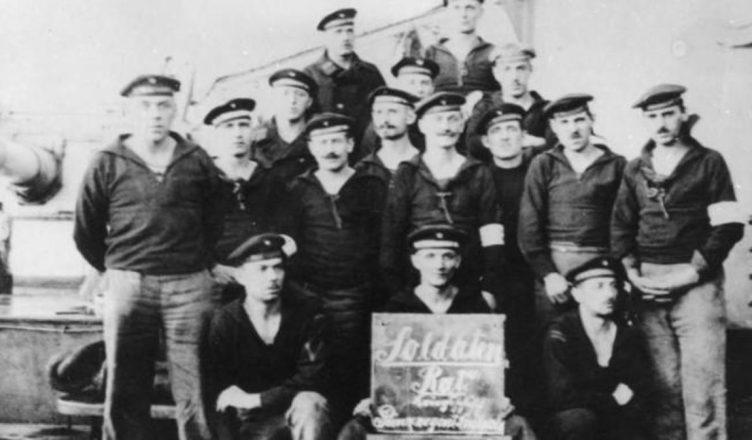
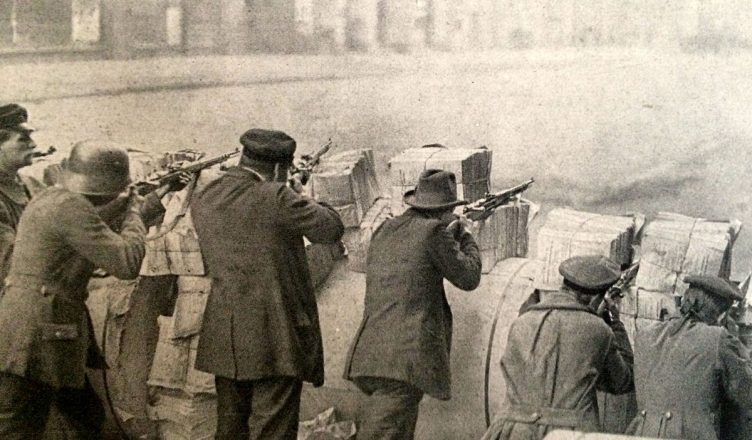
The following are the notes from the talk given at the ACG public meeting in Leicester on 10th November 2018In this centenary of the end of the First World War and the media hyping of Remembrance Day we have stories like “How Lloyd George Ended the War” along with praise for Marshal Petain, the arch-militarist and leader of the Vichy regime from French President Macron. We are told the Allies were fighting for “civilisation” and democracy against Prussian militarism. Curiously the German Empire from 1871 to 1918 (and the North German Confederation before it in 1867) had universal male suffrage whereas universal male suffrage was not introduced in Britain until 1918 (women in both Britain and Germany had to wait until after the War for any voting rights). But how did the World War Really end? In fact, it was the working class that brought about the end of the War through disorder, riots, mutinies, strikes and indeed two revolutions.
The First World War was a watershed for the workers movement. The majority of the Social Democratic Parties in Europe, including the Labour Party, took the side of their particular states, whilst syndicalist unions like the Confederation General de Travail (CGT) which had promised a general strike if war broke out, caved in and were swept away by war fever. A minority of social-democrats like the Bolsheviks and the Menshevik Internationalists in Russia opposed the war. A minority within the anarchist movement supported the Allies, with the majority taking clear anti-war positions.
In fact, the Armistice signed by Marshal Foch with the German military leaders on November 11th 1918 did not end the War. Fighting continued on many fronts with a result that 10,000 were killed, wounded or reported missing on that day. Indeed, the Allies continued to wage war with the new Russia created by the February and October Revolutions long after the signing of the Armistice. Britain and France eventually withdrew from Russia in April 1919 because of strikes and mutinies in their own countries.
In Britain and France in there was great support for the War. In Germany there was a more subdued support for the War, whilst in the Austro-Hungarian Empire the subject peoples-Slovenes, Czechs, Ruthenes, Croats, Serbs, Italians etc- were tepid about mobilising. This less than enthusiastic support for the war became more pronounced as the Austro-Hungarian Empire quickly suffered several defeats. In Russia there was discontent from the start and a defeatist attitude towards the Tsarist autocracy’s direction of the war. This become more pronounced from 1915 with the start of mutinies within the Russian Army.
In Britain the Labour Party supported the War, in France the Socialists in general and the unions did the same, with the exception of Jean Jaures whose anti-war stance led to his murder. In Germany the Socialists rallied the German working class with the defence of civilisation against Russian autocracy and barbarism. The German trade unions banned all strikes, the only exception being the anarcho-syndicalist FVDG whose anti-war position led to their banning by the State. Those Socialist MPs- Liebknecht, Ruhle- who had anti-war and internationalist positions, failed to vote against war credits in the German Parliament on August 4th and obeyed Party discipline. Only one socialist deputy abstained and he failed to make any political statement about this act.
The First World War followed the American Civil War in its industrialised slaughter. Casualties began to mount and in Britain this led to the introduction of conscription in January 1916, resulting in draft dodging and conscientious objection. Within the Russian Empire war weariness, exacerbated by food shortages, grew and in February 1917 women workers and housewives demonstrated on International Women’s Day with the slogans of Down With The War! And Give Us Bread! They brought out male workers in the factories and combined with soldiers’ mutinies this brought about the February Revolution.
The February Revolution in Russia had immense sympathy among the working class internationally, first of all because it was seen as a way of ending the War.
In Germany living standards began to fall because of the war and the allied blockade. Prices rose and inflation soared. Wages fell and by 1915-1916 many foods became scarce, with a veritable famine. However, the rich were protected from this suffering, and this included the officer class within the army and navy. This developed a class consciousness and a polarisation between the ruling class and the mass of the population. Starting in 1916 workers ignored the Social Democratic Party and the trade unions and took part in direct action and strikes to improve their situation.
The following year there were massive strikes throughout Germany. The worsening food situation was aggravated by a fuel shortage. The Russian Revolution further added fuel to the fire. In April 1917 there were huge strikes in Berlin, Leipzig and elsewhere. 200-300,00 went on strike in Berlin against a decrease in bread rations. In Leipzig the strike became openly political with demands for peace without annexations, and freedom for political prisoners.
The strikes were followed by hunger strikes in the Navy against the decrease in food rations. The officers were thoroughly hated for their arrogance and the fact that they were better fed. In August mutinies broke out with sympathy strikes in Wilhelmshaven harbour. The High Command reacted with repression and two sailors were executed.
Massive demonstrations followed in German cities in November 1917. In January 1918 in Austria, which faced a similar situation to Germany, there were massive strikes and demonstrations because the peace talks with Russia were failing. A massive strike followed in Berlin on January 28th. The demands of the strike were: workers’ representation in the peace talks, better food, the end of martial law, and a democratic regime in Germany. The strike spread to many towns and cities., with over a million on strike in the next few days. The authorities replied with repression, deploying police and the military. The strike failed but in July and August wildcat strikes broke out, but they were soon defeated. Serious defeats increased the number of desertions. By late October the German High Command attempted a naval attack on Britain. Sailors at Wilhelmshaven and Kiel were expecting peace and feared that this expedition would destroy any chance of peace negotiations and that the officer class were planning a coup d’état. Mutinies broke out. Sailors took over Kiel forming sailors’ councils with dock workers also creating workers’ councils. The rebellion spread to other ports and harbours. This was followed by a spontaneous uprising throughout Germany. Soldiers refused to fire on the demonstrators. Workers, soldiers’ and sailors’ councils emerged everywhere. On 9th November the Kaiser abdicated and fled to the Netherlands. The monarchy was ended and the new republic began peace negotiations with the Allies. The action of the masses had brought about the end of the War.
As we have seen there was also unrest in Austria. Mutinies broke out in Czech and Ruthene units in June 1916. And these spread in 1917 and 1918. On February 1st, 1918 a mutiny broke at at Cattaro (Kotor) in Montenegro with Czech and Italian sailors in the forefront. A red flag was run up on the cruiser St George. The mutiny was crushed, with 4 of its leading lights executed. In France where soldiers suffered great suffering in the trenches mutinies began in May 1917. The 21st Division revolted and its leaders were shot. Revolts followed in the 120th Division and then the 128th. Twenty thousand deserted. The authorities reacted with a mixture of repression and compromise, executing 49 whilst promising more leave and better conditions. At least 918 French soldiers were executed during the War. Russia had sent two brigades to fight with the French Army in 1916. Mistreatment by the French led to unrest, with an outright mutiny taking place in May 1917. The French then moved the brigades to La Courtine, an isolated camp in south central France. Here they held mass meetings and refused to return to the French front, having already suffered 4,000 casualties. They elected soldiers’ committees, refused to recognise their officers and defied the Russian High Command. The French military, in collusion with the new Kerensky regime in Russia, surrounded La Courtine and began an artillery bombardment. Hundreds died.
Within the Bulgarian Army unrest led to 600 executions. In Italy, which had joined the carnage later than the other combatants, there was an officer class that was drawn from the upper classes and which looked on the rank and file with contempt. Soldiers were seen as completely expendable resulting in huge losses. 750 executions took place with many hundreds of other summary executions. 25,000 deserted, 5,000 defied the callup whilst 34,000 others obeyed the call-up but deserted before mobilisation. There were mutinies in the Army with the Ravenna Brigade revolting in May 1917 and the Catanzaro units in July 1917. These were brutally repressed.
Within the British Imperial Army, where there was a similar class divide between the officers and the ordinary soldiers. Soldiers were flogged and manacled for trivial offences. New Zealand troops mutinied at Etaples in September 1917. Later in the month a mutiny resulted in 23 deaths at Boulogne. Strikes broke out in labour battalions on September 11th, and mutinies continued through to 1918. Resistance to the war expressed itself in self-inflicted injuries to avoid being sent to the Front. As a result, 3,894 soldiers were sentenced to prison for these actions.
Friday, 26 October 2018
MEETING10/11/18 How did WW1 really end?
HOW DID WORLD WAR 1 REALLY END?
2pm Saturday 10th November 2018
Venue:
Upstairs at the Regent Club
102 Regent Rd, Leicester LE1 7DAAsk at the bar downstairs for the “Libsoc”
meeting
With this year marking the 100th anniversary of the ending of the First
World War, Leicester ACG will be holding a public meeting to look at what
really brought the Great War to an end. In schools, the ruling class history
curriculum teaches schoolchildren the reasons World War 1 started – forgetting
the part about imperialist thieves falling out and fighting over markets for
various national capitalist interests. School history lessons generally shy
away from remembering what actually ended the war. This meeting explains
why.
102 Regent Rd, Leicester LE1 7DAAsk at the bar downstairs for the “Libsoc” meeting
Friday, 14 September 2018
Leicester ACG on Facebook
Leicester group has a new Facebook page!
This can be found at:
https://www.facebook.com/Leicesteranarchistcommunistgroup/
This can be found at:
https://www.facebook.com/Leicesteranarchistcommunistgroup/
Tuesday, 11 September 2018
Leicester ACG Radical Reading Group – Council Communism 4/10/18
The next meeting for Leicester ACG’s Radical Reading Group takes place on Thursday 4th October, upstairs at the Regent Club, 102 Regent Rd, Leicester LE1 7DA
This month, we'll be looking at
Council communism was an influential and historic anti-state communist tendency which developed mostly in the Netherlands and Germany, where for a time it became a significant force within the working class movement. Notable council communist theorists and supporters included Anton Pannekoek, Herman Gorter, Otto Rühle, Sylvia Pankhurst, Paul Mattick and Reichstag fire starter, Marinus van der Lubbe. Lenin dismissed it as an “infantile disorder” but council communist ideas have since influenced a range of more libertarian left-marxists as well as non-marxist groups such as the Anarchist Communist Group. Essentially, council communism is:
The Mark Shipway text is available HERE
This month, we'll be looking at
Council Communism by Mark Shipway
Council communism was an influential and historic anti-state communist tendency which developed mostly in the Netherlands and Germany, where for a time it became a significant force within the working class movement. Notable council communist theorists and supporters included Anton Pannekoek, Herman Gorter, Otto Rühle, Sylvia Pankhurst, Paul Mattick and Reichstag fire starter, Marinus van der Lubbe. Lenin dismissed it as an “infantile disorder” but council communist ideas have since influenced a range of more libertarian left-marxists as well as non-marxist groups such as the Anarchist Communist Group. Essentially, council communism is:a theory of working-class struggle and revolution which holds that the means that workers will use to fight capitalism, overthrow it, and establish and administer communist society, will be the workers' councils.
The Mark Shipway text is available HERE
Wednesday, 25 July 2018
30th August: Leicester Radical Book Group
Leicester ACG is
holding its first radical book group on Thursday 30th August,
7:30-8:30/9.00 at The Snug, Exchange Bar, 50 Rutland Street, Leicester
LE1 1RD.We will be discussing “The Organisational Platform of the Libertarian Communists” (The Platform) by the Dielo Truda Russian exile group and the subsequent debate between Makhno and Malatesta (links to content below). It’s a genuinely interesting and important debate about how to organise effectively to change society.
Everyone who is interested in radical politics is welcome. You don’t need to confirm in advance if you are attending but if you have any questions please get in touch via leicesteraf@gmail.com
To read the Platform online, click HERE
And the following debate between Malatesta and Makhno is viewable HERE
Saturday, 21 July 2018
Libertarian Socialist Discussion on the NHS 24/7/18
Tuesday the 24th July, 7:30pm at the Regent Club
102 Regent Road
Leicester LE1 7DO.
This month's meeting is on the NHS.
The local ACG are meeting to discuss the NHS, why we should defend it and why we must move beyond it. This is an open meeting for everyone who is interested in discussing the limitations of a nationalised health service and how political resistance can move beyond simply defending a flawed system.
Tuesday, 8 May 2018
Housing crisis: an anarchist communist response
Leicester Libertarian Socialist Discussion
7.30pm, Wednesday 16th May
at the Regent Club, 102 Regent Road, Leicester LE1 7DA
Meeting organised by Leicester ACG
7.30pm, Wednesday 16th May
at the Regent Club, 102 Regent Road, Leicester LE1 7DA
Meeting organised by Leicester ACG
Friday, 27 April 2018
International Workers' Memorial Day 28/4/18
Rally at Town Hall Square11.30am on Saturday 28th April
Public Meeting at 12.30
Organised by Leicestershire & District Trades Union Council
"Every year, more people are killed at work than in wars. Most don't die of mystery ailments, or in tragic 'accidents'. They die because an employer decided their safety just wasn't that important a priority. Workers' Memorial Day (WMD) commemorates those workers."
Wednesday, 18 April 2018
No War But The Class War!
Statement by the Anarchist Communist Group
A hundred cruise missiles were launched against the military installations of the Assad regime. In the aftermath the US Ambassador to the United Nations, Nikki Haley, stated that the United States was “locked and loaded”. Together the US, France and Britain have engaged in bombings that will be of no benefit to the Syrian masses suffering under the murderous regime of Bashar Assad.It can be seen that all three regimes in the USA, France and Britain have their own domestic problems, and that a military adventure is always a good ploy to divert attention. Trump is wrestling with the ongoing Muller investigation, the revelations of ex-FBI Director Comey, and ongoing legal wrangles with porn star Stormy Daniels and polls that show his lack of popularity. Theresa May is faced with serious divisions in her own Party, deepening problems over Brexit, not to mention that she is hanging on to power thanks to an alliance with the DUP. Macron faces increasing unrest at home with what looks increasingly like a re-run of May 1968.
Trump was elected President on a populist programme, but part of that programme was that he would withdraw troops from Iraq and not be involved in military adventures in the Middle East. This was in stark contrast to Hillary Clinton who maintained an aggressive stance towards Russia and calls for a no-fly zone over Syria that would have caused confrontation with Russia, Assad’s ally. Now Trump has betrayed his populist base, to the horror of some of his previous conservative backers.
Haley has stated that the US would maintain its troops in Syria and would start sanctions against Russian firms doing business with Assad.
Some of the most virulent critics of Trump have been papers like the Washington Post. In a lead editorial just after the bombings it criticised the joint US, French and British attack as inadequate and attacked Trump for saying that he had been ready to withdraw American troops from Syria. Similar views were aired in anti-Trump paper the New York Post. It is clear that a substantial part of the US ruling class wish to pursue a more aggressive attitude towards Russia and its allies. They are concerned by the new alliance between Russia, Turkey and Iran and the weakening US influence in the Middle East.
For the last quarter of a century, the US and its allies have been engaged in constant warfare, using fabricated excuses like the bogus weapons of mass destruction to dismantle the regime of their former ally Saddam, overthrow Gaddafi in Libya because of an “imminent” massacre of civilians and now the gas attacks by the Assad regime.
The attacks on the Syrian regime were not a last minute response but the result of plans prepared over many months as can be seen by the high level of coordination between the three state powers.
Large sections of the US ruling class including the leaders of the military have little confidence in Trump being able to oversee moves against Russia and its allies. That is why the campaign against Trump is increasing in intensity at the same time as aggressive moves by the US and its allies. This has been explicitly stated by neo-conservatives who link the removal of Trump to the expansion of war moves.
In the USA, France and Britain there is widespread anti-war feeling and this has been aggravated by the bombing attacks. In Germany, sections of the ruling class there have expressed the need to re-arm and, at the same time, pursue foreign policies less dependent on the USA. This turn is justified by lauding German “high moral and humanitarian standards”.
Assad is a bloody dictator and it is highly possible that he used gas attacks against the Syrian population. However those who condemn Assad are the same States that justified mass bombings of Hamburg and Dresden and two atom bomb attacks on Japan during World War Two, the use of the chemical Agent Orange in Vietnam, as well as the deployment of napalm there and previously in Greece, and the use of white phosphorus in Fallujah by Saddam, then the ally of the West. More recently, the British government has had few qualms about providing the weaponry used by the Saudi Arabian military to kill numerous civilians in Yemen.
The USA realised it has lost influence in the Middle East. It and its allies initially backed the Islamist militias in their attempts to overthrow Assad. Now ISIS is a shadow of its former self and Assad controls 75% of Syria. Russia had been warned before the bombing attacks with the hint that its own forces and bases there would not be touched. Nevertheless it was implied that the USA was still the only surviving superpower and that Russia should not overstep the mark.
Russia will not easily abandon its ally, Syria. It needs the Mediterranean ports that Syria provides. On the other hand the USA would like to confine Russia to the Black Sea and is seriously concerned about the new alliance, temporary though it may be, between Turkey and Russia and the increasing strength of the Shiite axis in Iran, Iraq and with Hezbollah in Lebanon.
Israel launched its own attacks on its old enemy, Syria, obviously with the approval of the USA. For its part, Turkey is looking to increase influence and presence in Syria and has moved against the Kurdish controlled enclave of Afrin, exploiting the tensions between the great powers.
Whatever the outcome, it is clear that the different world and regional powers are gearing up for more armed conflict. In Syria over 400,000 people have been slaughtered and many more have been displaced. The situation is the same in Iraq. The masses there have nothing to gain from the murderous and barbarous depredations of the different armed gangs, whether they be Russian, American, Turkish or Islamist etc. Only revolution to overthrow all these regimes offers any alternative.
For now, we call on all internationalist and class conscious workers, communists, anarchists and revolutionary socialists to come together under the ‘No War But The Class War’ banner to promote working class resistance to the bosses’ war machine.
War Is The Health of The State!
No War But The Class War!
Friday, 23 March 2018
With Allies Like These - Meeting 25/4/18
April’s ACG libertarian socialist discussion meeting discusses the document With Allies Like These: Reflections on Privilege Reductionism by the now defunct Canadian group, Common Cause. The pamphlet criticises the theory and practice of anti-oppression politics. Meeting takes place on
Wednesday 25th April at 7.30pm at
Regent Sports & Social Club, 102 Regent Road, Leicester LE1 7DA
Thursday, 8 March 2018
Midlands Discussion Forum, Birmingham 17/3/18
Reforms, Reformism and the Welfare StateThe subject is reforms and reformism in the context of the recent years of UK austerity and public sector cutbacks and the rolling back of the 'welfare state' - with particular reference to how we relate to left and union lead campaigns in response to this (for instance with the NHS). Saturday 17th March at 2pm at the Woodman Pub back room, New Canal Street, Birmingham B5 54G (next to the parkway at the Curzon Stret end) and 15 mins walk from New Street or Moor Street railway stations. All Welcome. Following documents may be useful: HERE and HERE.
Saturday, 3 March 2018
Meeting - What is anarchist communism? 21/3/18
What is Anarchist Communism?Following on from the foundation of the Anarchist Communist Group, our next monthly libertarian socialist discussion meeting in Leicester is a back to basics, ‘what’s it all about this anarchist communism lark’ discussion.
7.30pm, Wednesday 21st March at the Regent Sports & Social Club, 102 Regent Road, Leicester LE1 7DA
Sunday, 25 February 2018
Subscribe to:
Posts (Atom)


